

Pediatric Ophthalmologist Vienna
Age-appropriate ophthalmic care and orthoptic assessment for visual development, strabismus and other eye problems in children.
Book an appointment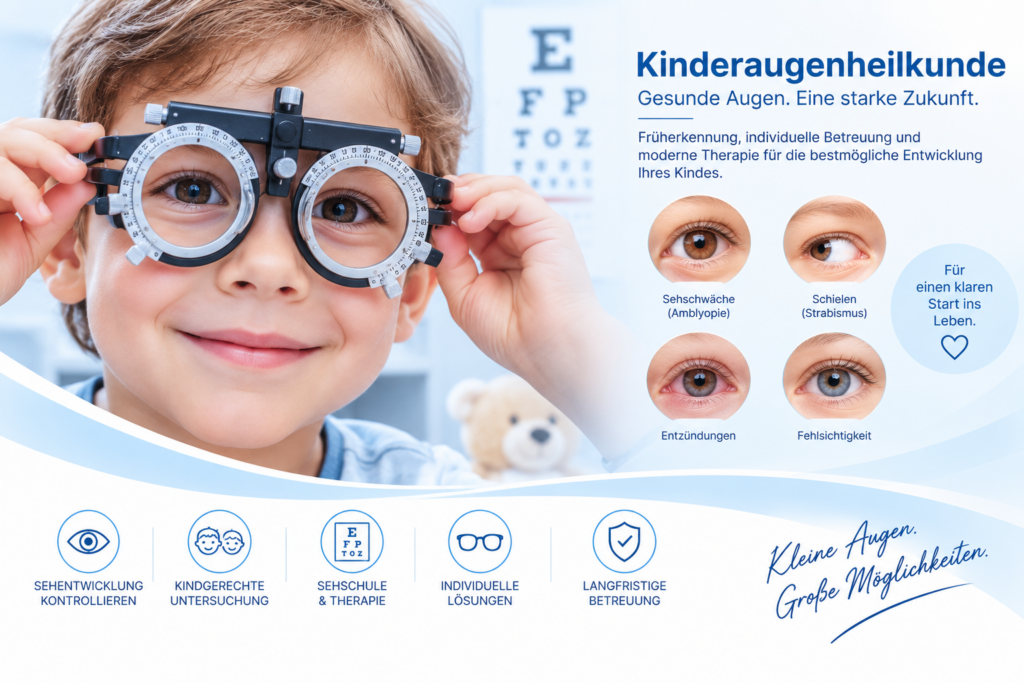
Early assessment of children’s vision
Children may not notice or report reduced vision, particularly when only one eye is affected. Ophthalmic and orthoptic examinations can assess visual development, eye alignment, refractive errors and other causes of visual difficulty.
Individual specialist care
Examination, assessment of indications and treatment planning are tailored to your clinical findings. OA Dr. Ammar Alkhalde FEBO is a specialist in ophthalmology and optometry and an eye surgeon with international clinical experience.
Related topics
Age-appropriate examination with a focus on visual development
How the examination works
The examination is adapted to your child’s age and ability to participate. It may include visual-acuity testing, assessment of eye alignment and movements, orthoptic tests and, when indicated, an examination after pupil dilation and objective measurement of refractive error.
Why early detection matters
Children often do not notice refractive errors, strabismus or amblyopia themselves. Detecting relevant problems in visual development early allows appropriate treatment to begin sooner.
Clinical sources: AAO EyeWiki – Pediatric Vision Screening · AAO EyeWiki – Amblyopia
Frequently asked questions
When should a child see an ophthalmologist?
An examination is useful for noticeable strabismus, visual difficulties, headaches, unusual visual behaviour or a check-up recommended by a doctor.
What does orthoptic assessment involve?
Orthoptics assesses eye alignment, how both eyes work together and age-appropriate visual functions.
Is an examination useful without symptoms?
Depending on age, family risk factors or findings at preventive examinations, an ophthalmic check-up may be appropriate.