

Dry Eyes Vienna
Targeted assessment of burning, foreign-body sensation, redness and tear-film instability with individually tailored treatment.
Book an appointment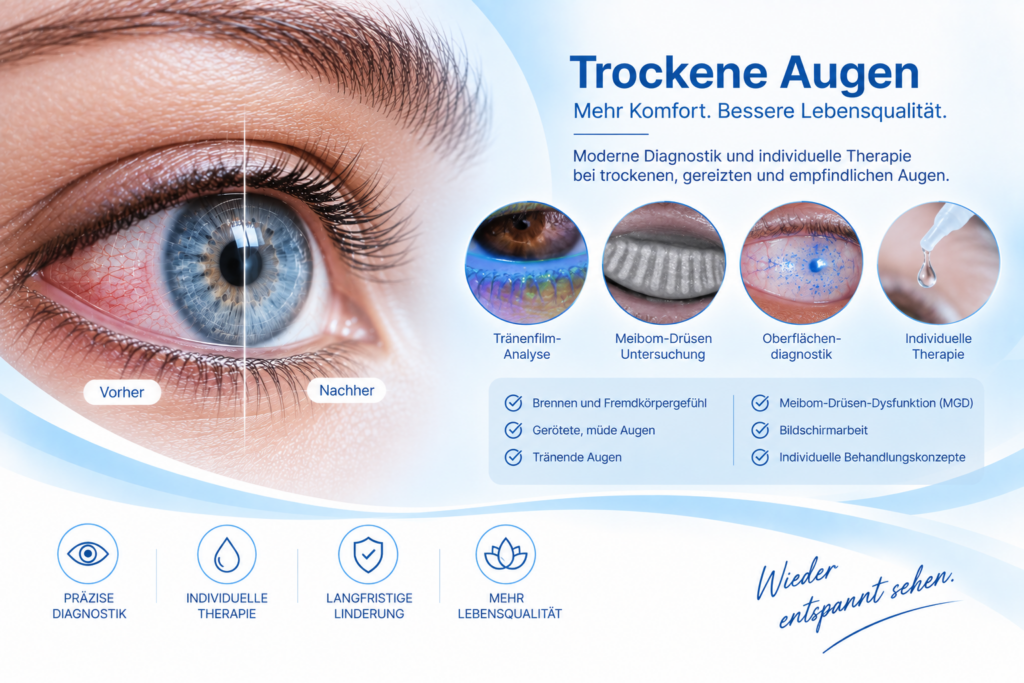
Dry-eye assessment
Dry eye can cause burning, stinging, redness, fluctuating vision, foreign-body sensation and sometimes increased tearing. Assessment considers the ocular surface, tear film, eyelid margins and possible contributing factors.
Individual specialist care
Examination, assessment of indications and treatment planning are tailored to your clinical findings. OA Dr. Ammar Alkhalde FEBO is a specialist in ophthalmology and optometry and an eye surgeon with international clinical experience.
Related topics
Dry eyes: treating the cause as well as symptoms
Assessing the ocular surface
Alongside symptoms and medication history, we examine the eyelids, tear film, cornea and conjunctiva. Depending on the findings, we may also assess tear-film stability, surface staining, tear quantity and meibomian-gland function.
Treatment according to the cause
Treatment depends on whether tear deficiency, evaporation, eyelid-margin or meibomian-gland problems, inflammation or other factors predominate. Options include tear substitutes, eyelid hygiene, warmth and, when indicated, prescription treatments.
Clinical sources: AAO EyeWiki – Diagnostic Testing for Dry Eye · AAO EyeWiki – Dry Eye Syndrome
Frequently asked questions
Which symptoms are typical?
Burning, a foreign-body sensation, redness, fluctuating vision or paradoxical watering can be associated with dry eyes.
What is assessed during the examination?
Depending on the symptoms, we assess the ocular surface, tear film, eyelids and other possible causes.
How are dry eyes treated?
Treatment is tailored to the cause and severity and may include tear substitutes, eyelid hygiene or further targeted measures.