

Keratoconus Vienna
Specialist assessment of keratoconus and other corneal conditions using modern diagnostics and individual follow-up.
Book an appointment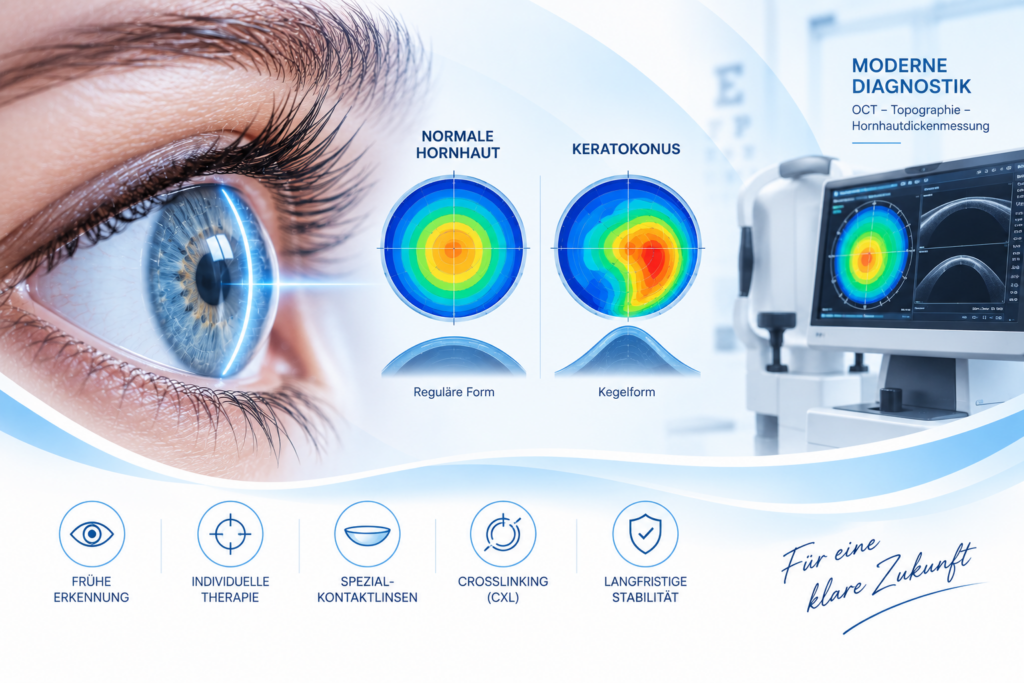
Keratoconus assessment and follow-up
Keratoconus is a progressive change in corneal shape that can cause increasing astigmatism, blurred or distorted vision and frequent changes in spectacle prescription. Careful corneal assessment and repeated measurements help determine whether the condition is stable or progressing.
Individual specialist care
Examination, assessment of indications and treatment planning are tailored to your clinical findings. OA Dr. Ammar Alkhalde FEBO is a specialist in ophthalmology and optometry and an eye surgeon with international clinical experience.
Related topics
Keratoconus: monitoring changes and planning treatment
What a follow-up assessment involves
Accurate refraction and corneal measurements are important. Corneal topography or tomography and thickness measurements help assess the corneal shape and its changes. Comparing measurements over time helps determine whether the condition is progressing.
When is cross-linking considered?
Corneal cross-linking primarily aims to stabilise progressive corneal ectasia. The decision is individual and takes age, progression, corneal findings and other factors into account. Regular follow-up remains important after treatment. Temporary pain, sensitivity to light or corneal haze may occur.
Questions about keratoconus
What is keratoconus?
Keratoconus is a condition in which the cornea progressively changes shape, potentially affecting visual acuity and image quality.
Why are follow-up examinations important?
Repeated measurements help assess whether the cornea is stable or changes are progressing.
Which treatment options may be suitable?
Treatment depends on severity, progression and quality of vision. Suitable options are discussed individually after the diagnostic assessment.