

Macular Degeneration Vienna
Ophthalmic diagnosis and follow-up for age-related macular degeneration and other macular conditions.
Book an appointment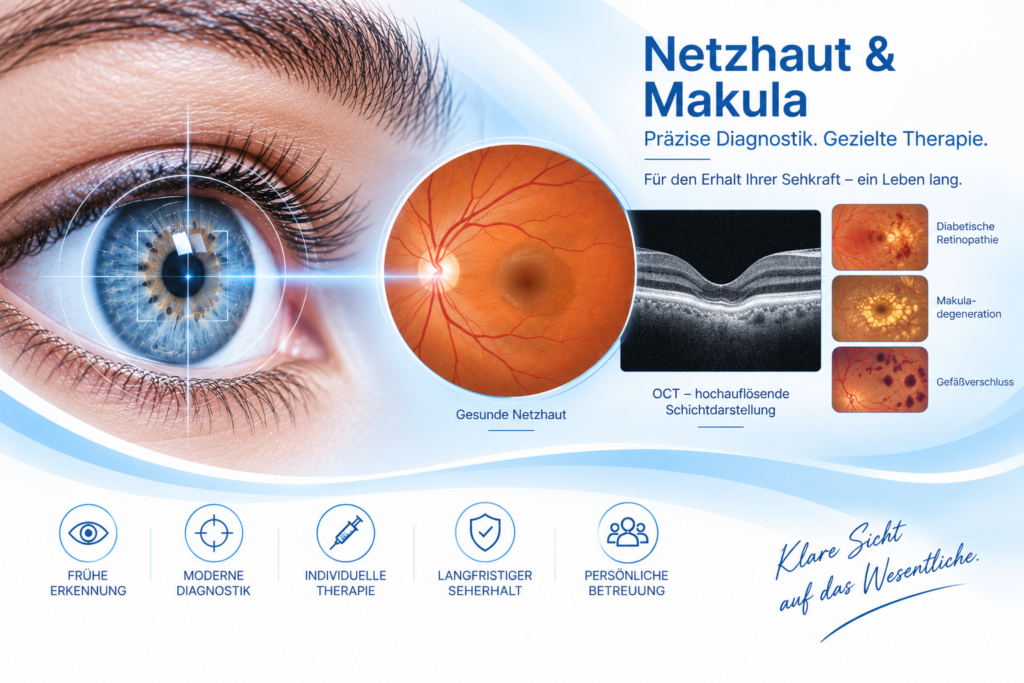
Assessment of the macula
The macula is responsible for detailed central vision. Macular disease can cause distortion, reduced central visual acuity or difficulty reading. Examination and OCT imaging help distinguish different forms of macular disease and guide follow-up.
Individual specialist care
Examination, assessment of indications and treatment planning are tailored to your clinical findings. OA Dr. Ammar Alkhalde FEBO is a specialist in ophthalmology and optometry and an eye surgeon with international clinical experience.
Related topics
Macular degeneration: distinguishing dry and wet forms
Diagnosis
Assessment includes examination of the macula and often OCT imaging. This provides detailed information about retinal structure, fluid and other changes. Further imaging may be appropriate for specific clinical questions.
Treatment and follow-up
Treatment depends on the form of macular degeneration. Intravitreal medicines play a central role in neovascular or wet AMD. In dry forms, monitoring and individual risk assessment are important. New distortion or rapid loss of central vision should be assessed promptly.
Clinical sources: AAO EyeWiki – Age-related macular degeneration · AAO EyeWiki – Optical Coherence Tomography
Frequently asked questions
Which symptoms can macular degeneration cause?
Possible symptoms include distorted vision, reduced central visual acuity and difficulty reading or recognising details.
What role does OCT play?
OCT shows fine retinal structures and helps identify macular changes and monitor them over time.
Which treatments are possible?
Treatment depends on the form and activity of the condition. Intravitreal injections may be relevant for certain wet forms.